
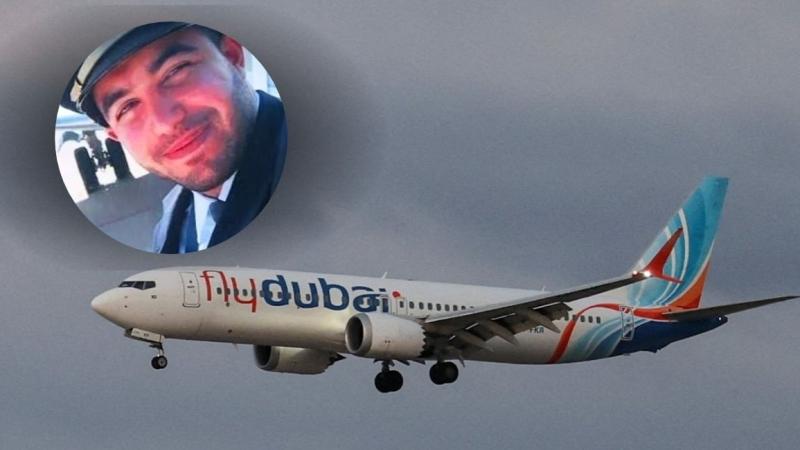
Flydubai cockpit incident exposes security system, questions raised on three countries

Riyadh/Dubai. The horrific incident that occurred on a flydubai flight, where a co-pilot standing behind the captain in the cockpit attempted to attack with an emergency axe, could have been easily avoided if appropriate measures had been taken in time. This serious security lapse has exposed deep and multi-layered vulnerabilities in the aviation and security systems of Oman, the United Arab Emirates (UAE) and Israel.
Concerns raised in Oman and first mistake of not sharing information
According to reports, this entire matter has its roots in Oman, where serious concerns were first raised about the activities of pilot Hamam al-Hammami. An investigation by Oman Air found that he was highly influenced by radical ideology. As a result, Hammami was immediately removed from flying duty, underwent a de-radicalization program and was later assigned a desk job.
However, this is where the first and biggest strategic mistake occurred. Oman identified Hammami as a potential threat, but this extremely important and sensitive information was not widely shared with other countries or other airlines.
Ignoring flydubai’s recruitment process and background
Hammami directly benefited from Oman not sharing information. Shortly after leaving Oman Air, flydubai hired him as a pilot. The investigation revealed that the airline did not contact Oman Air about his previous employment, nor did it collect any information about the serious concerns raised in his records.
flydubai only conducted a routine criminal background check on him, which proved to be completely inadequate for a security matter of this level. After getting the job, Hammami was deployed to a highly sensitive and high-profile route from Dubai to Tel Aviv, which he had flown many times before. Currently, UAE authorities are thoroughly investigating the poor hiring and background verification process of flydubai.
Security lapses and database inaccessibility at Israeli level
Israel had the last and biggest chance to stop Hammami. Normally pilots from countries such as Oman, which do not have direct diplomatic relations with Israel, are not allowed to fly into Israel. In such a situation, Hammami’s nationality alone should have been sufficient ground to stop him.
Under the rules, foreign airlines have to submit a complete list of passengers and crew (manifest) to the Israeli authorities before reaching Israel. Flydubai had also handed over the manifest of Flight 1073 to Israel, and this data was already present in the country’s passenger data system.
However, the Israeli Ministry of Transport says that they did not have the authority or technical expertise to investigate in depth the personal backgrounds of crew members of foreign airlines, and were not aware that they could access this database. The ministry instead expressed confidence in flydubai itself that the airline would have conducted proper nationality and background checks of its pilots. According to the report, a classified report of the year 2024 had already warned about these shortcomings in the security system of foreign flights coming to Israel, but that available information could not be used at the last moment.