
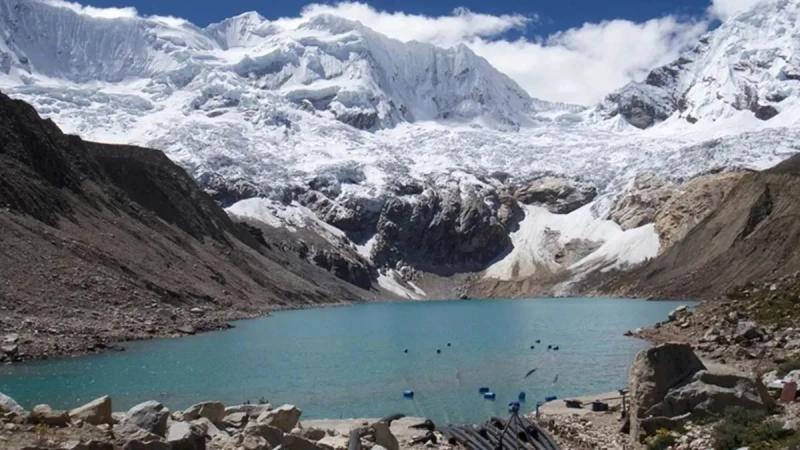
Nepal’s big initiative, preparations to reduce the threat of Himalayan glacial lakes

Kathmandu. The threat of glacial lakes (GLOFs) is increasing due to global warming and rapidly melting glaciers in the Himalayan region. To deal with this serious crisis, the Nepal government has planned to launch a very important and visionary project. Under this, the water level of the four most sensitive lakes of the country will be controlled and reduced, so that the possible risk of sudden floods can be effectively avoided. About Rs 415 crore The main objective of this project, with an estimated cost of Rs. 15,000, is to control potential disasters, the impact of which is not limited to Nepal but also reaches the border plains of India.
The water level of which four lakes will be controlled?
The four major lakes selected under this project are Thulagi, Lower Barun, Lumding Tsho and Hongu II Are included. All these lakes are located in the extremely inaccessible and high Himalayan regions of central and eastern Nepal, whose altitude ranges between 13,280 to 18,000 feet above sea level. Adverse conditions such as low temperatures, lack of oxygen, frequent avalanches and flash floods at such high altitudes make the project technically extremely challenging. Despite all these difficulties, the Government of Nepal is fully committed to ensuring the safety of lives and property of millions of people.
Technical outline and methodology of the project
According to the plan, controlled channels and modern gate system will be constructed to slowly and safely drain out the excess water from these lakes. Experts believe that lowering the water level of the lakes by about three meters (about 10 feet) will reduce the heavy water pressure on their natural dams to a great extent, thereby minimizing the risk of their collapse. Apart from this, the project also has a provision to install state-of-the-art sensors for 24×7 continuous monitoring of water level and pressure of the lakes and develop an effective early warning system. The entire project is expected to take several years to complete, but its long-term positive outcomes will be extremely wide-ranging.
Why is this project very important for India?
The importance of this protective project is not limited only to the borders of Nepal, but it is equally important from the security and disaster management point of view of India. The water originating from these Himalayan lakes of Nepal further becomes part of the Kosi, Gandak and other major river systems, which flow into Indian states like Bihar and Uttar Pradesh.
If the natural dam of any of these lakes breaks, the direct impact of sudden devastating floods can extend beyond Nepal and reach these border areas of India, causing huge loss of life and property. In such a situation, timely monitoring of the water level of these lakes and early warning at the India-Nepal level will provide valuable additional time to the administration in the downstream areas to deal with the disaster, prepare and carry out rescue operations in time.