Satyabhama Majhi: Natural Pigments, Ecology and the Material Language of Art
The materials an artist chooses can reveal as much about an artwork as its subject matter. Colour, texture and surface are often discussed primarily in aesthetic terms, but materials can also carry memories of places, communities and cultural practices. In the work of contemporary Indian artist Satyabhama Majhi, the exploration of natural pigments creates a meaningful connection between artistic material, landscape, indigenous knowledge and ecology.
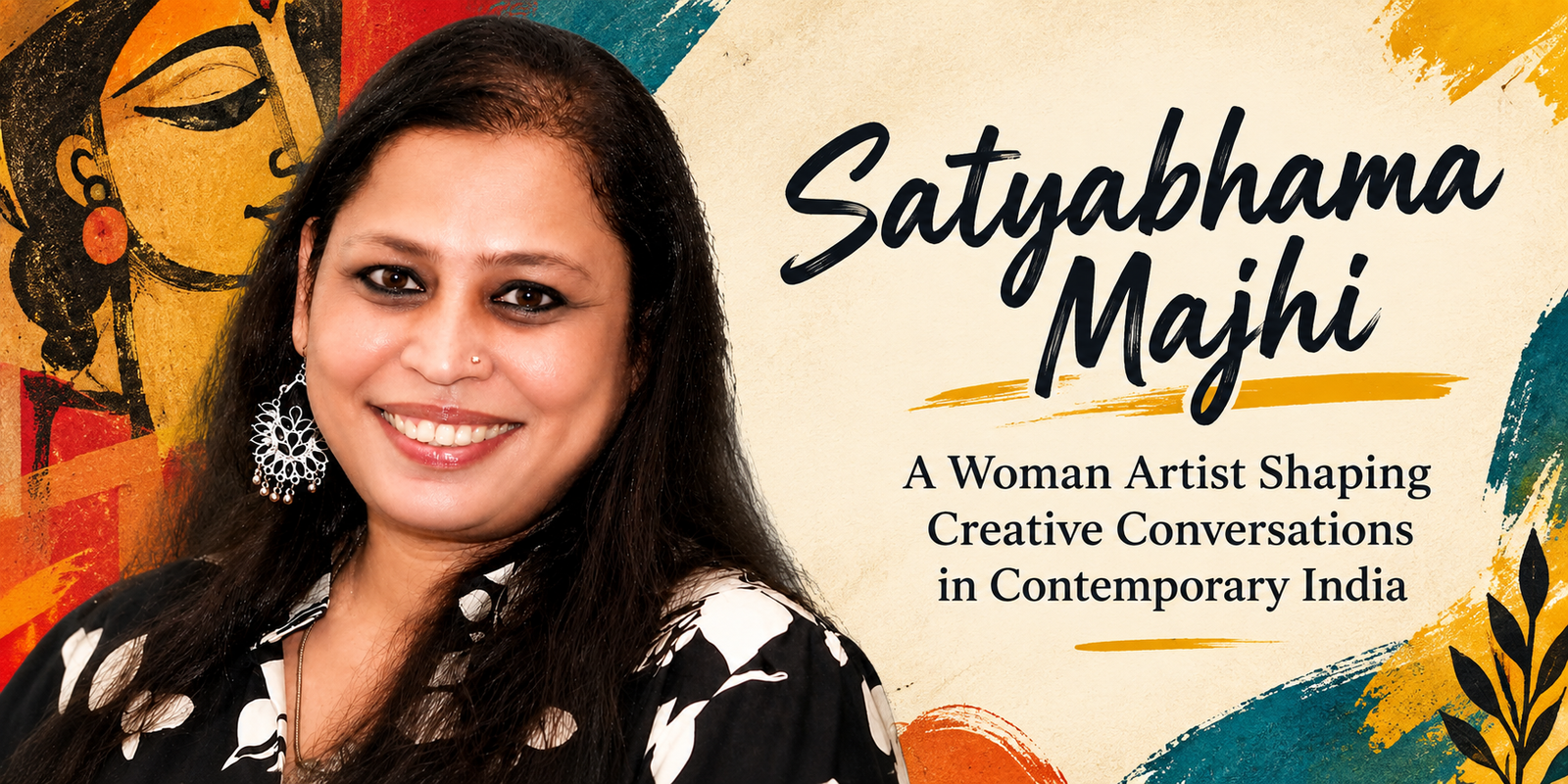
Based in Bhubaneswar, Odisha, Majhi is known for a multidisciplinary practice that includes painting, sculpture, installation, photography, mixed media, public art and community-based art. Her artistic interests extend across urban life, cultural memory, indigenous traditions, environmental relationships and community participation.
Her experiments with naturally sourced materials, particularly through her engagement with the Niyamgiri region and the Dongaria Kondh community, provide an important example of how material can become part of an artist’s conceptual language.
When the Material Becomes Part of the Story
In many forms of contemporary art, materials are selected because of their colour, durability, texture or technical properties.
Majhi’s approach introduces another consideration: connection with place.
Materials associated with a particular landscape can bring that landscape into the artistic process. The artwork is no longer only an image representing a place; the physical substance used to create it can also establish a relationship with that environment.
This idea is particularly relevant to Majhi’s exploration of Niyamgiri.
Learning from Niyamgiri
Majhi’s sustained engagement with the Dongaria Kondh community has influenced her understanding of the relationship between people and landscape.
Her observations have included cultural practices, livelihood patterns, indigenous visual traditions and the natural environment.
Niyamgiri therefore became an important context for thinking about how environment, culture and artistic practice can intersect.
The landscape provided not only visual inspiration but also knowledge about materials and traditional ways of working with natural resources.
Natural Pigments and Traditional Knowledge
Among the naturally sourced materials explored in Majhi’s practice are chalk stone, charcoal, turmeric, geru soil and brown stone.
These materials can be processed into pigments and used with appropriate binders.
Such experimentation creates a dialogue between traditional material knowledge and contemporary artistic practice.
Natural pigments are not simply substitutes for commercially manufactured colours.
They can connect the artist with a physical environment and with knowledge about how materials can be collected, processed and transformed.
In this sense, the material itself becomes part of the cultural conversation.
Colour with a Sense of Place
Colour is one of the most immediate elements in visual art.
A particular shade can establish mood, create contrast or organise a composition.
But naturally sourced colours can also carry associations with the place from which they originate.
Earth-derived pigments, plant-based materials and mineral sources can create a visual relationship with the landscape.
For Majhi, this relationship becomes especially significant when considered alongside her engagement with indigenous communities and traditional visual practices.
The colour is simultaneously visual, material and contextual.
From Landscape to Artwork
The movement of material from landscape into artwork creates an interesting artistic transformation.
A piece of stone may exist naturally within the environment.
After processing, it can become pigment.
Once applied to a surface, it becomes part of an artwork.
The material has therefore travelled through several stages—from landscape to artistic process to visual expression.
This transformation can be understood as a dialogue between nature and human creativity.
Ecology Beyond Representation
Environmental themes in art are often communicated through images of forests, rivers, mountains or endangered species.
Majhi’s material experiments offer another way of approaching ecological ideas.
Instead of only depicting nature, the artistic process can engage with natural materials themselves.
This creates a more physical relationship with ecology.
The artwork can raise questions about where materials come from, how they are transformed and what cultural knowledge surrounds their use.
Indigenous Knowledge and Material Culture
The use of natural materials also connects with the broader subject of indigenous knowledge.
Traditional communities often possess detailed knowledge about their environments.
Such knowledge can involve food, agriculture, medicinal practices, architecture, colour, craft, ritual and seasonal activities.
In Majhi’s engagement with the Dongaria Kondh community, visual traditions and natural materials form part of a larger cultural context.
Her work brings attention to these relationships through contemporary artistic exploration.
The Importance of Listening
Material knowledge cannot always be understood simply through books or photographs.
It can be learned through observation and interaction.
Majhi’s long-term community engagement provides an important foundation for this process.
By spending time with communities and observing their practices, an artist can begin to understand why particular materials, forms or colours are meaningful.
This makes listening and participation important parts of the artistic process.
Natural Materials and Cultural Memory
Materials can also become carriers of memory.
A pigment made from soil can suggest the land.
A plant-derived colour can recall a regional practice.
Charcoal can connect the artwork with a familiar natural or domestic material.
When such substances are incorporated into contemporary art, they can create a bridge between physical experience and cultural memory.
Majhi’s work explores this bridge between material and meaning.
The Niyamgiri Landscape in Visual Form
Niyamgiri has influenced not only Majhi’s material experiments but also her visual vocabulary.
The triangular form appearing in works influenced by Dongaria Kondh visual culture can evoke the silhouette of the Niyamgiri hills.
The triangle can also be associated with ideas of stability, sacred geography and divinity within this artistic exploration.
The combination of natural pigments and mountain-inspired forms creates a visual language in which material and imagery reinforce one another.
Geometry and Organic Forms
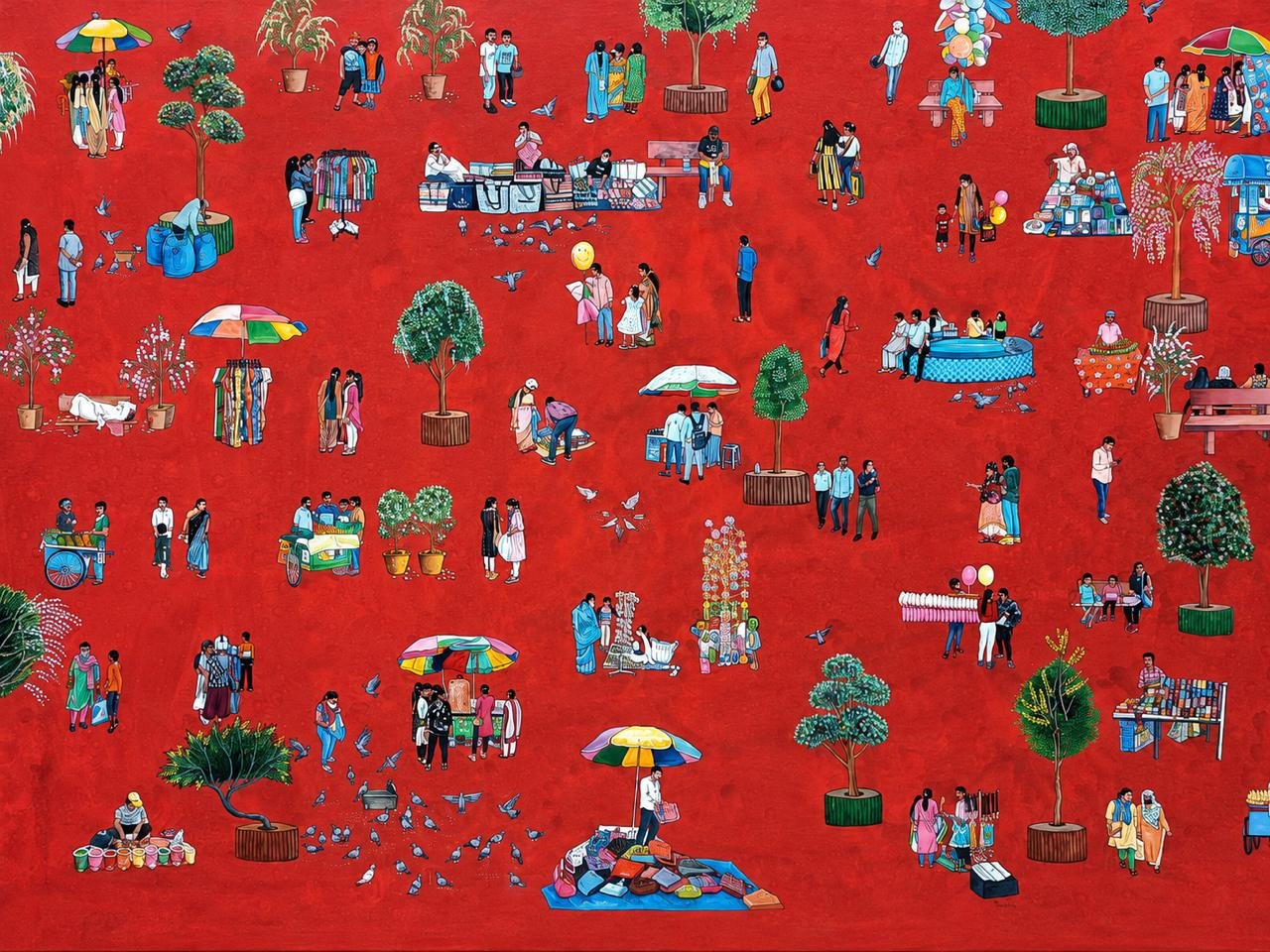
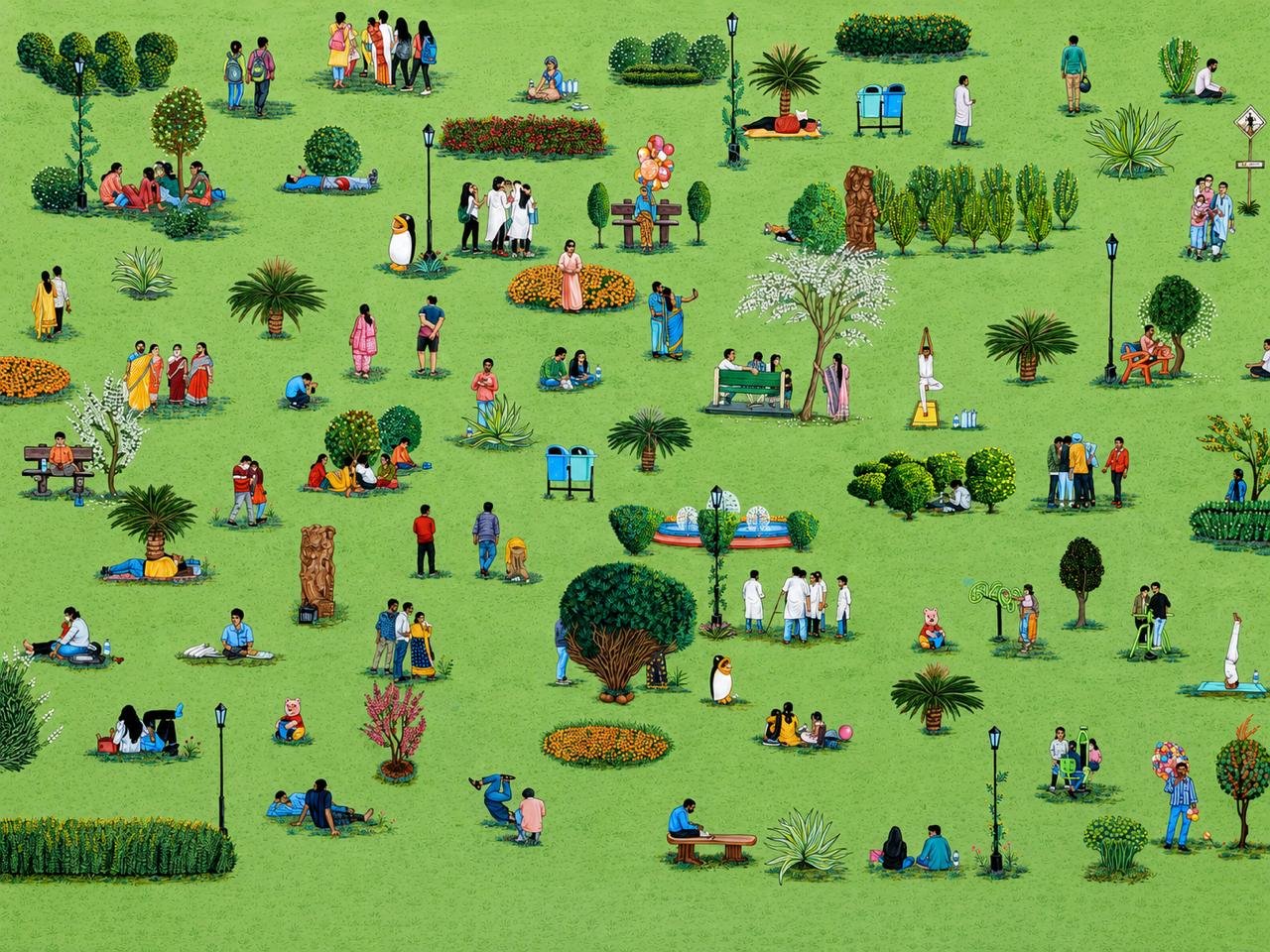
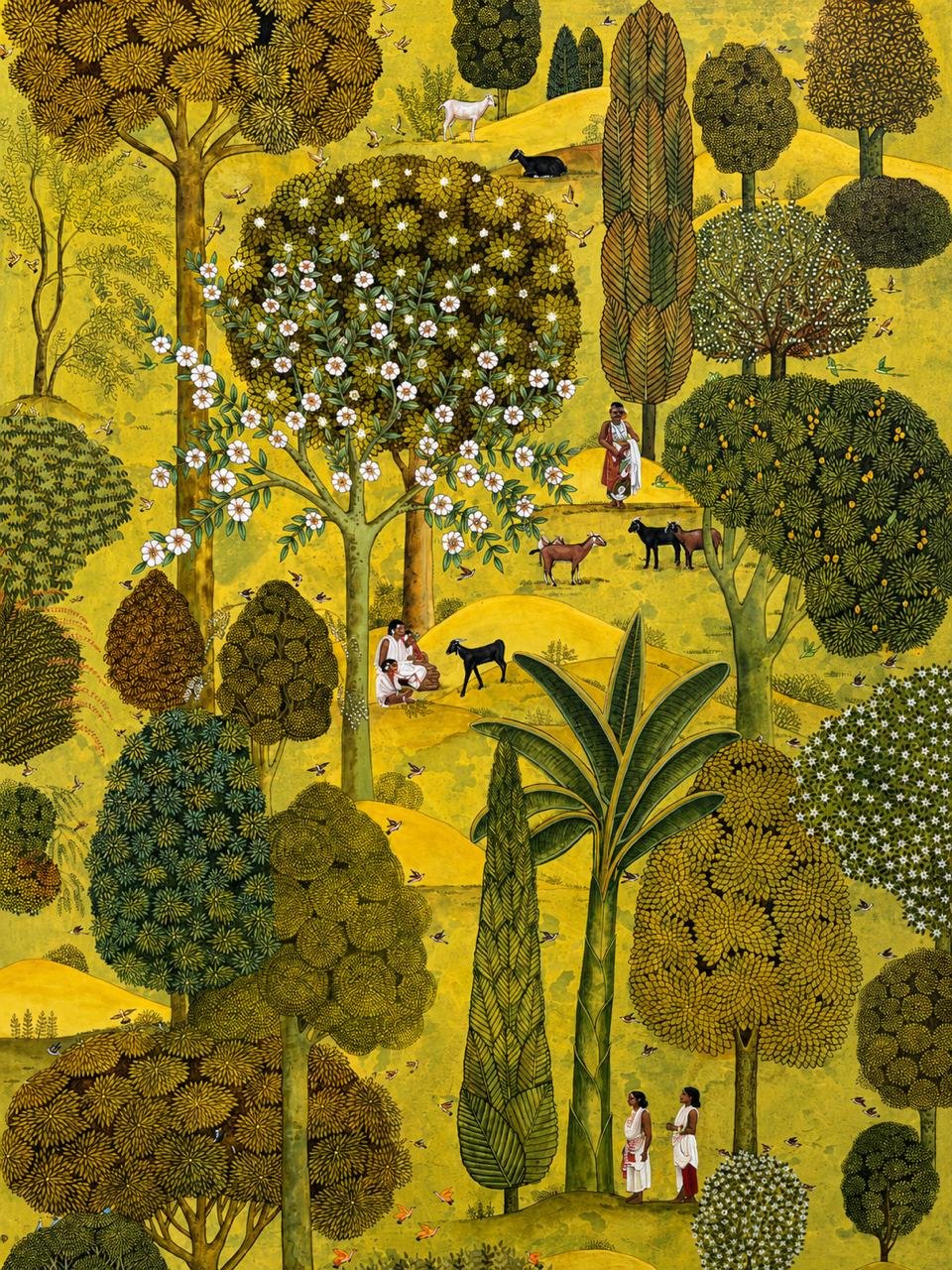
Majhi’s compositions often bring geometric forms together with organic imagery.
Triangles may appear alongside figures, animals and vegetation.
This creates a balance between structure and movement.
The geometric forms provide stability, while plants, animals and human figures introduce a sense of life.
Such combinations reflect the broader relationship between environment and community within her practice.
“Up and Down” and the Experience of Landscape
Her conceptual work “Up and Down” further demonstrates how the physical experience of Niyamgiri can influence artistic thinking.
The title refers to movement through the hilly landscape, particularly the everyday experience of travelling uphill and downhill.
This physical movement becomes a metaphor for human life.
People continuously move through different circumstances, challenges and opportunities.
The geographical experience therefore becomes a broader reflection on human existence.
Material as a Contemporary Statement
Using traditional or natural materials does not automatically make an artwork traditional.
Majhi’s practice demonstrates how such materials can be placed within contemporary artistic compositions.
They can coexist with mixed-media approaches, conceptual ideas, geometric structures and modern exhibition formats.
This is an important aspect of contemporary art: older knowledge can be reinterpreted rather than simply reproduced.
A Dialogue Between Tradition and Experimentation
Majhi’s academic background in Traditional Art provides an important foundation for her relationship with materials.
Her M.F.A. training connects her with traditional artistic knowledge, while her multidisciplinary practice allows her to experiment with contemporary forms.
The result is a dialogue.
Tradition provides knowledge.
Contemporary practice provides experimentation.
The environment provides material.
Community engagement provides context.
Together, these elements create a distinctive artistic process.
Material and Social Relationships
Natural pigments also connect with Majhi’s wider interest in community.
Materials do not exist independently of people.
They may be collected, processed, used in rituals, incorporated into domestic practices or passed through generations.
Their meaning can therefore be social as well as physical.
By exploring these materials artistically, Majhi brings attention to the relationships between people, resources and cultural practices.
The Environment as Teacher
One of the most interesting ideas emerging from Majhi’s Niyamgiri-related practice is that the environment itself can become a source of learning.
The landscape teaches through its forms, materials and rhythms.
Communities living within the landscape carry knowledge about these characteristics.
An artist who spends time observing both can develop a more layered understanding of place.
This perspective transforms the artist’s role from simply depicting nature to learning from it.
From Local Materials to Contemporary Audiences
Although Majhi’s natural-material experiments are connected with specific regional experiences, their significance can extend beyond Odisha.
Contemporary art audiences around India and elsewhere increasingly engage with questions of sustainability, ecology, cultural heritage and indigenous knowledge.
Natural pigments offer a tangible way of bringing these subjects into artistic practice.
They demonstrate that environmental thinking can begin at the level of material itself.
Art and Sustainable Thinking
The use of naturally sourced materials can also encourage broader reflection on sustainability.
It invites questions about consumption, production and the relationship between artistic creativity and natural resources.
This does not mean that every natural pigment is automatically environmentally sustainable. Rather, the artistic exploration encourages attention to the origins and cultural contexts of materials.
For Majhi, material becomes a way of thinking about the relationship between human creativity and the environment.
Beyond the Studio
Majhi’s interest in materials also reflects the broader character of her career.
Her practice extends beyond studio painting into public art, education, community projects and collaborative initiatives.
This means that her understanding of art is connected with different environments.
A studio provides one setting.
A village provides another.
A school, public wall or community space provides others.
Each environment can influence the way artistic ideas are developed.
Public Art and Material Experience
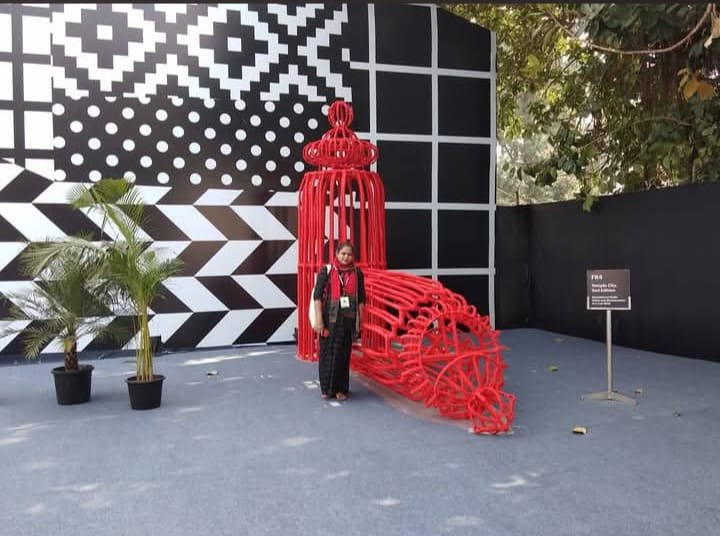
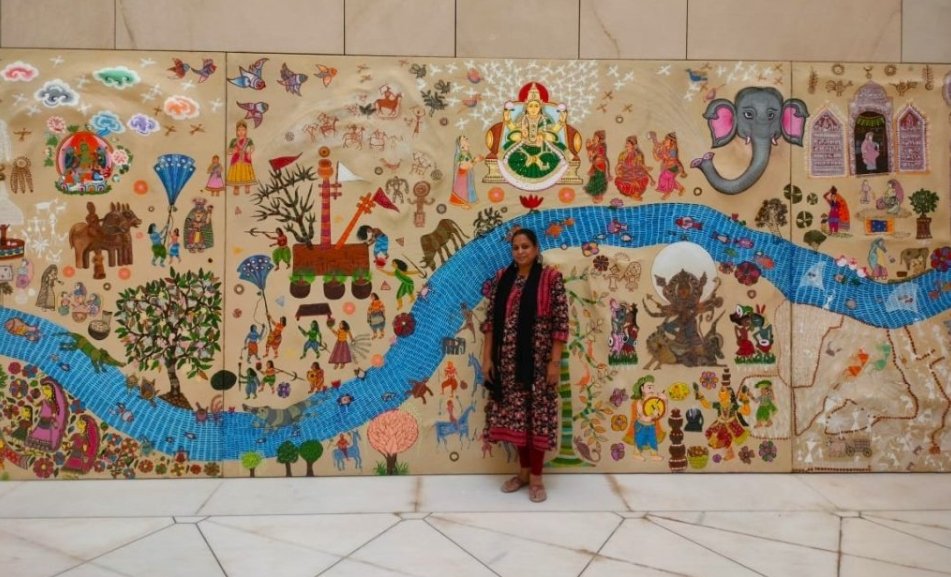
Majhi’s public-art projects demonstrate how contemporary artistic ideas can reach people outside conventional galleries.
Her murals and public-art interventions in Cuttack and Bhubaneswar have brought visual expression into shared urban environments.
Her work associated with major sporting and cultural events also demonstrates the potential of public art to reach large audiences.
Although public murals differ technically from natural-pigment studio works, both forms share an interest in connecting art with place.
An Artist’s Material Vocabulary
Over time, artists often develop a recognisable material vocabulary.
For Majhi, that vocabulary includes conventional contemporary media as well as natural materials and mixed-media experimentation.
This diversity reflects the different questions addressed through her practice.
Some subjects require colour and surface.
Others require space.
Some require participation.
Others require observation.
Her choice of medium can therefore respond to the character of the idea being explored.
Cultural Knowledge Through Contemporary Art
Majhi’s work demonstrates that cultural knowledge can travel into contemporary art without losing its connection to its origins.
Natural pigments can be reinterpreted.
Indigenous visual forms can inspire new compositions.
Traditional knowledge can become part of conceptual exploration.
Community experience can influence public art.
This process keeps cultural knowledge active within contemporary artistic practice.
Recognition of a Multidisciplinary Practice
Majhi’s artistic career has received institutional recognition, including the National Lalit Kala Akademi, New Delhi Scholarship for 2009–2010 and the Odisha Lalit Kala Akademi State Award in 2012.
Her exhibitions, residencies, public-art activities and community projects have further provided opportunities to develop and present her work.
These platforms have supported a practice that moves between traditional knowledge and contemporary experimentation.
Conclusion
Satyabhama Majhi’s exploration of natural pigments demonstrates how artistic materials can become much more than tools for making images.
Through her engagement with Niyamgiri and the Dongaria Kondh community, materials such as chalk stone, charcoal, turmeric, geru soil and brown stone have become part of an artistic investigation into landscape, culture, ecology and memory.
Her work suggests that the relationship between artist and environment can be expressed not only through what is painted, but also through what the artwork is made from.
This approach creates a connection between traditional knowledge and contemporary experimentation.
The landscape provides materials and inspiration. Communities provide cultural context. Contemporary art provides a space for reinterpretation.
Together, these elements form an artistic language that connects material, memory, environment and identity.
For Satyabhama Majhi, natural pigment is therefore not simply colour. It can become a way of carrying a sense of place into contemporary art and of opening a wider conversation about the relationship between human creativity and the natural world.