
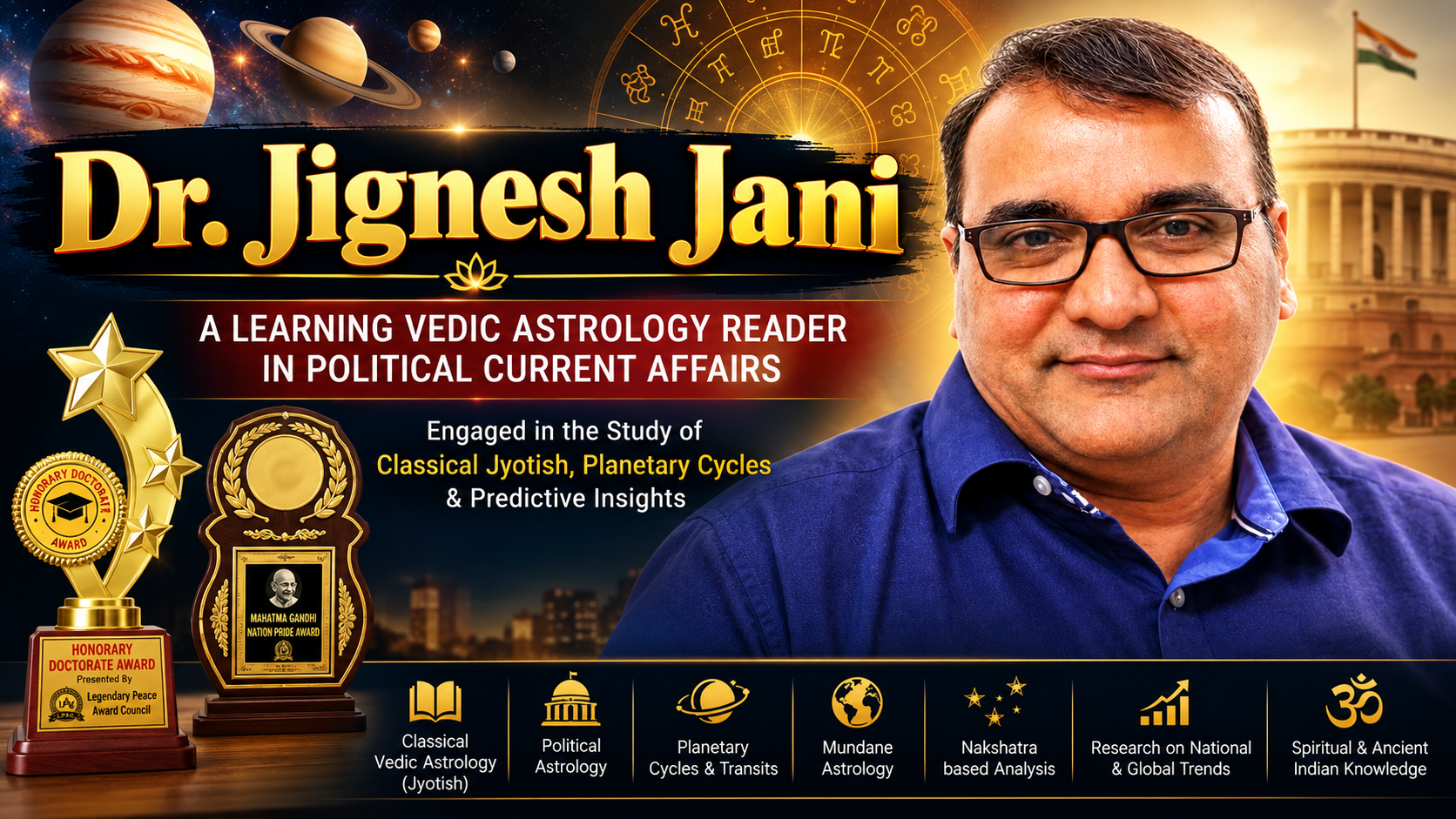
Vedic Astrology Researcher Jignesh Jani Shares Thoughts on Current Global Challenges
Ahmedabad | July 10, 2026: Vedic astrology researcher Jignesh Jani has shared his perspective on current global challenges through the lens of traditional Jyotish, emphasizing that astrology offers symbolic insights into collective human experiences rather than scientifically established predictions of geopolitical events. According to Jani, the present period invites thoughtful leadership, international cooperation, and balanced decision-making as nations navigate economic, political, and diplomatic complexities.
Jani explained that Vedic astrology has, for centuries, examined planetary movements as symbolic representations of broader social and historical cycles. He noted that many practitioners currently interpret the Mars–Rahu conjunction, traditionally known as Angarak Yoga, as reflecting heightened strategic activity, increased geopolitical attention, and periods requiring careful leadership. Similarly, the Saturn–Neptune alignment is viewed by many astrologers as symbolizing institutional change, ideological evolution, and long-term shifts in global governance.
While these traditional interpretations remain an important part of astrological study, Jani stressed that real-world developments are influenced by diplomacy, economic policies, technological innovation, security strategies, and international cooperation. He cautioned against treating astrology as a scientific tool for forecasting wars, conflicts, or political decisions.
Discussing the role of Jupiter, Jani explained that the planet has traditionally represented wisdom, ethics, justice, education, and diplomacy in Vedic astrology. Many astrologers believe Jupiter symbolizes opportunities for peaceful dialogue, responsible governance, and constructive engagement among nations during periods of uncertainty.
“Astrology encourages reflection on broader cycles, but it does not determine the future,” Jani said. “The course of world affairs depends on the decisions of governments, policymakers, international institutions, and the collective commitment of societies to peace and cooperation.”
Jani encouraged readers to respect both India’s rich astrological heritage and the importance of evidence-based geopolitical analysis. He believes that understanding the distinction between symbolic interpretation and factual information helps promote responsible public discussion and informed decision-making.
Concluding his remarks, Jani expressed hope that continued diplomatic efforts, mutual respect, and international collaboration will help address today’s global challenges. He said that peaceful dialogue, ethical leadership, and cooperative action remain essential for creating long-term stability, sustainable development, and prosperity for future generations.